A mayor who built his name challenging the NYPD just learned that silence, in a crisis, can be louder than any slogan.
Story Snapshot
- Two fatal NYPD shootings, hours apart, turned Zohran Mamdani’s first 100 days into a referendum on his credibility on crime.
- The mayor waited overnight to speak, while Commissioner Jessica Tisch rushed to call the officers’ actions “heroic.”
- The gap between their responses exposed a deeper clash between progressive reform rhetoric and real-time public safety leadership.
- How Mamdani handles the investigations and his policing agenda now will define whether he looks hesitant or serious about keeping New Yorkers safe.
Back-to-back shootings that forced a mayor to choose a side
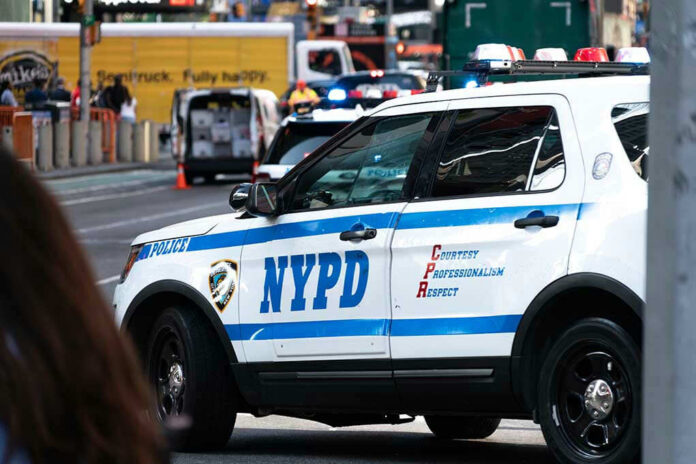
New York did not ease Mamdani into the job. Within hours on a Thursday night, officers shot and killed a man inside NewYork‑Presbyterian Brooklyn Methodist Hospital after staff said he barricaded himself with a sharp object and threatened patients, and then killed another man in the West Village after he allegedly pointed what looked like a firearm during a traffic-related encounter. The “gun” in the Village turned out to be an air pistol, but the body count was real.
Those locations mattered. A hospital is supposed to be the last place New Yorkers think about gunfire, especially when the crisis looks like a mental health breakdown. The West Village incident unfolded in a dense, affluent neighborhood where residents pride themselves on both liberal politics and quality-of-life expectations. When bullets fly in spaces like that, mayors do not get to stay theoretical about policing. They must show, quickly, whether they back officers’ split-second choices or second-guess them from the podium.
A reformist mayor meets the hard edge of command responsibility
Mamdani did not rush to the microphones. He was briefed Thursday night but waited until Friday morning to issue a statement and speak at a previously scheduled event, explaining that he wanted to ensure his words were “accurate and intentional.” By then, Commissioner Jessica Tisch had already praised the officers’ actions as “nothing short of heroic” and promised an “exhaustive investigation and review.” Her message was simple: the cops saved lives, and City Hall had their backs.
That contrast landed with a thud inside law‑and‑order circles and among some everyday New Yorkers who just want clear assurance that the city will not waffle when violence erupts. Mamdani campaigned and legislated as a Democratic Socialist critic of NYPD funding and tactics, aligned with “defund” rhetoric. Now, he is the boss of the department he spent years attacking. Conservative instincts say leaders must set aside ideology when lives are on the line: protect the innocent first, then dissect the policy mistakes. Hesitation at that moment, fairly or not, looks like confusion about whose side you are on.
Mamdani and Tisch: an arranged marriage under stress
The awkwardness runs deeper than one slow response. Mamdani chose to keep Jessica Tisch, a data-driven, unapologetically pro‑enforcement commissioner whose criminal‑justice instincts are described as “diametrically opposed” to his earlier positions. The two had recently appeared together touting what NYPD called historic reductions in shootings and victims, boasting that 2025 saw the fewest shooting incidents in modern city history. For a moment, that partnership let Mamdani borrow credibility on public safety he had never earned with police.
The twin shootings exposed how fragile that arrangement is. Tisch moved instantly to defend her officers and their judgment. Mamdani tried to occupy a narrow middle lane: calling the incidents “devastating,” recognizing the “incredibly difficult and dangerous circumstances” for officers, and promising “thorough and swift” investigations. That might satisfy policy wonks, but ordinary New Yorkers watching the news rarely reward nuance in the first 24 hours. They want to know whether their mayor thinks the cops did their job or not. Dragged-out, lawyerly messaging is how previous mayors turned single incidents into multi-year political wounds.
Mental health crises, defund baggage, and the Department of Community Safety
The hospital shooting also collided directly with Mamdani’s signature promise: creating a Department of Community Safety to take over mental‑health‑related 911 calls from the NYPD. He argues that clinicians and specialized responders should handle psychiatric crises, freeing officers to focus on crime. Critics warn that sending unarmed staff into volatile situations is reckless and that police are still the only ones trained and equipped for the worst‑case scenario. The hospital incident looked exactly like the kind of call his new department would inherit.
Pressed on whether his proposed model would have changed the outcome, Mamdani refused to speculate. That may be prudent legally, but politically it underscores the core tension: his reforms sound humane on paper, but real life produces people with weapons in crowded emergency rooms. American common sense says compassion and accountability matter, but so does making sure the nurse goes home alive. Any new system that ignores that reality, because it fears offending activists, will lose public support the first time something goes sideways.
What this early test reveals about leadership, safety, and trust
These shootings remain under investigation by the NYPD Force Investigation Division, with no announced discipline or policy changes yet. The real action is happening in the court of public opinion. To his base, Mamdani risks looking too deferential to police. To a broader electorate that values order, he already looks late and careful where they prefer quick and clear. Previous mayors learned that once you stumble on a high‑profile police killing, every future incident is framed as part of a pattern you cannot shake.
For New Yorkers who just want safe streets and honest government, the standard is straightforward. Support officers who act within the law and training, demand transparent investigations when someone dies, and build better mental‑health responses without turning responders into martyrs. Tisch’s reaction checked the first box decisively. Mamdani still has time to show he grasps all three. But in a city that measures leadership in minutes, not think pieces, the clock on his learning curve has already started.
Sources:
AMNY – “Mamdani’s first 100 days: Mayor faces first public safety test after two NYPD shootings”
Politico – Reporting on NYPD fatal hospital shooting and political reaction
NYC Mayor’s Office – Transcript of Mamdani and Tisch announcing public safety statistics
La Voce di New York – Coverage of Mamdani’s response to Thursday night shootings