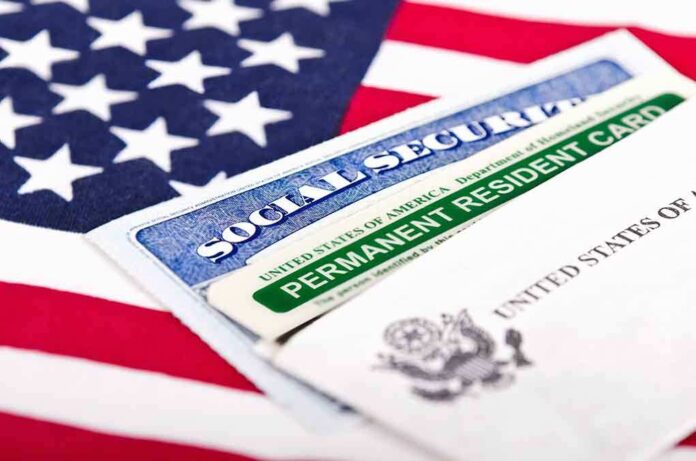
A federal immigration lottery program that randomly awards green cards to foreign nationals has been suspended after revelations that a gunman who terrorized Brown University entered America through this very system.
Story Snapshot
- DHS Secretary Kristi Noem suspends the Diversity Immigrant Visa lottery program
- Brown University shooter entered the US through this lottery system in 2017
- The perpetrator received a green card despite the program’s lack of comprehensive vetting
- Decision highlights fundamental flaws in America’s immigration screening processes
Immigration Lottery Under Fire After Campus Violence
The Diversity Immigrant Visa lottery, which annually distributes 55,000 green cards through a random selection process, has faced scrutiny for years over its minimal vetting requirements. The program requires only a high school education or equivalent work experience, with winners selected purely by chance rather than merit or thorough background investigation. Critics have long argued this approach creates unnecessary security vulnerabilities in America’s immigration system.
Noem announces pause on immigrant visa lottery that allowed alleged Brown shooter to enter US https://t.co/FxfBK3zwsu #FoxNews
— In God I Trust. (@sobhealth) December 19, 2025
The Brown University incident has now provided concrete evidence of these concerns. Secretary Noem’s announcement connects a direct line between the lottery program’s loose screening mechanisms and real-world violence on American soil. This connection raises serious questions about how many other potentially dangerous individuals may have gained entry through similar pathways over the program’s decades-long existence.
Security Gaps in Random Selection Process
Unlike other immigration pathways that prioritize skilled workers, family reunification, or humanitarian cases, the diversity lottery operates on pure chance. Applicants from countries with low immigration rates to the United States can enter their names into what essentially amounts to a geographic quota system. The lack of comprehensive background checks beyond basic criminal history screening has created what security experts describe as a significant blind spot.
The 2017 entry date means the Brown University perpetrator lived in America for approximately seven years before committing this act of violence. This timeline demonstrates how lottery-based immigration can create long-term security risks that may not manifest immediately. The extended period also raises questions about what monitoring or follow-up procedures, if any, exist for diversity visa recipients once they enter the country.
Administrative Response and Policy Implications
Secretary Noem’s decision to pause the program represents a significant shift in immigration enforcement priorities. The suspension affects thousands of pending applications and future lottery drawings, sending a clear message that security concerns will take precedence over diversity goals. This move aligns with broader efforts to strengthen immigration vetting procedures across all entry pathways into the United States.
The timing of this announcement, coming shortly after the campus incident, suggests the administration is taking a proactive stance on immigration security rather than waiting for additional incidents to occur. This approach reflects a fundamental reassessment of how America balances humanitarian and diversity goals against national security imperatives. The pause provides time for comprehensive review of the program’s structure and screening mechanisms.
Sources:
US Pauses Diversity Visa Program: Here’s What it Means for You