A lone federal officer swayed to the beat in a transport van while a furious protester accused her of “literally trafficking human beings” outside a New Jersey immigration detention center.
Story Snapshot
- A video shows a female Immigration and Customs Enforcement (ICE) officer dancing in a transport vehicle outside Delaney Hall in Newark.
- Protesters claim she was moving seven detainees to a private prison and accuse ICE of “trafficking human beings.”
- The clip comes amid days of tense, sometimes violent, protests over detention conditions and hunger strikes at the facility.
- Federal officials insist their detention and transport operations are lawful and say force was used only to control rioters and protect officers.
Dancing officer, furious protester, and a van full of detainees
The flashpoint started with a short video clip, not a court filing. In the clip, a female Immigration and Customs Enforcement officer sits in a transport vehicle outside Delaney Hall in Newark, New Jersey. She turns up loud music, shimmies in her seat, and smiles as protesters surround the van. One protester films her through the window and tries to bait her into a reaction.
The officer does not argue, roll down the window, or shout back. She keeps dancing, eyes forward, apparently waiting for the lane to clear. The protester narrating the video finally yells the line that pushed the clip viral: “You think that offends us? What offends us is that you’re literally trafficking human beings right now.” Activists online claim seven detainees sat in the van, headed for a private prison, and frame the dance as mocking human suffering.
What Delaney Hall is and why tensions were already boiling
Delaney Hall is not a local jail or a county drunk tank. It is a private prison in Newark, run by GEO Group under a major federal contract with Immigration and Customs Enforcement to hold immigration detainees. Reports and testimony about conditions there are grim: food with worms or mold, people sleeping on floors in crowded rooms, claims of harassment and sexual assault, and serious medical issues ignored.
In March 2026, detainees inside Delaney Hall launched a hunger and labor strike to protest conditions. Outside, activists, family members, and left-wing groups set up an almost constant presence. Some prayed. Some sang. Others blocked driveways and tried to stop ICE vehicles from moving detainees in or out. As with many immigration fights, the front gate turned into a stage where bigger arguments about borders, sovereignty, and compassion played out in raw form.
From protest to street battle: clashes, arrests, and official pushback
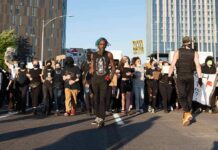
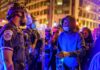
The mood around Delaney Hall did not stay peaceful. Over several nights, federal agents and anti-ICE demonstrators clashed again and again. Video and news reports show agents using batons, pepper spray, and so-called “less-lethal” rounds as they pushed crowds back from entrances and roadways. Protesters hurled objects, erected makeshift barricades, and sometimes surged toward vehicles trying to enter or leave.
By late May, more than 80 protesters had been arrested over a roughly two-week period for charges that included rioting and failure to disperse. Some activists shouted vile personal insults and even death wishes at ICE officers, telling them to “shoot yourself in the head.” Demonstrators and sympathetic media called it a righteous stand for human rights. Federal officials and many ordinary citizens saw a mob trying to shut down lawful enforcement through intimidation and chaos.
Why ICE says this was lawful transport, not “trafficking”
Against that backdrop, the dancing-officer video dropped into an already raging fire. Activists and progressive commentators quickly labeled ICE’s movement of detainees as “trafficking” and “kidnapping.” That language is powerful, but it does not match the legal reality. Human trafficking is a crime where private actors move people for exploitation. Immigration enforcement officers, whether you like their mission or not, operate under federal law and court orders.
Federal officials have repeatedly said their operations at Delaney Hall, including detention and transport, follow existing immigration statutes and contracts. They insist force was used only when protesters blocked roadways, attacked officers, or tried to stop vehicles, describing the worst nights as riots rather than peaceful protests. From a common-sense conservative lens, that claim fits the broader pattern: a lawful agency carrying out its job in the middle of a political street theater that sometimes turned violent.
Why a 10-second clip can never tell the whole story
Short videos are the weapon of choice in modern politics. Ten seconds of a dancing ICE officer looks cruel to someone who already believes the system is evil. The same clip looks like a stressed public servant shaking off harassment to someone who believes borders matter and laws should be enforced. Neither side, in that moment, can see the paperwork, the court orders, or the full timeline around the transport.
Published reporting so far confirms only a few hard facts: the officer danced in a vehicle outside Delaney Hall; protesters accused her of “trafficking”; activists allege seven detainees were in the van; and this happened amid hunger strikes, ugly clashes, and a large-scale security operation at the site. Nothing in the record shows a court finding that her actions were illegal. Federal leaders even later pulled ICE lines back from the protest perimeter and handed crowd control to New Jersey State Police, signaling they saw this as a public-order problem, not a confession of agency wrongdoing.
What this moment says about the larger immigration fight
The scene outside Delaney Hall captures the deeper national divide. One side uses the language of “concentration camp” and “trafficking” to argue that immigration enforcement itself is immoral. The other side sees a sovereign nation trying to control its borders, under constant attack from activists who want the benefits of American life without the duties that come with citizenship and law. Both sides reach for the most shocking images they can find.
But law still matters. Congress wrote the immigration laws. Courts sign detention orders. Immigration and Customs Enforcement officers carry them out. If conditions inside a private facility are abusive, the answer is oversight, lawsuits, contract changes, and legislation—not screaming “trafficker” at a rank-and-file officer and blocking her van. The Newark clip is not proof that America has abandoned the rule of law. It is proof that we argue about it now with cameras rolling, music blasting, and tempers one song away from boiling over.
Sources:
thegatewaypundit.com, thenerdstash.com, nytimes.com, abc7ny.com, cnn.com, nypost.com, foxnews.com, nbcnews.com, youtube.com
© restoreamericanglory.com 2026. All rights reserved.