
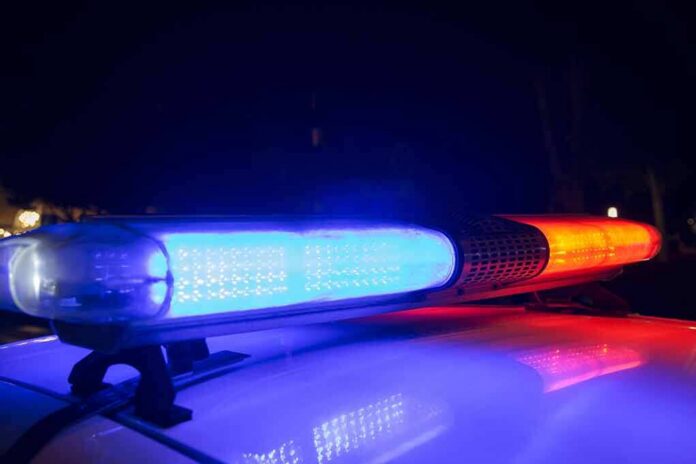
Twenty-five people from a Georgia high school football program went to hospitals after their team bus flipped during a late-night return from an away game.
Story Snapshot
- The Salem High School football program’s bus overturned near State Route 138 and Interstate 20.
- Rockdale County schools said 22 students and three staff were transported; no deaths reported.
- Georgia State Patrol described a loss of control during a right turn at the eastbound I-20 exit.
- The bus carried 27 people: 17 players, seven trainers, two coaches, and the driver.
What Happened At The I-20 Exit
Georgia State Patrol said the crash sequence began as the bus exited eastbound Interstate 20 and tried to turn right onto State Route 138 late Friday night. The bus lost control, left its path, and overturned in the Conyers area. Local agencies responded fast and shut down lanes for rescue and cleanup. District officials confirmed the vehicle carried the Salem High School football program returning from an away game in Norcross. Authorities reported no deaths as of Saturday morning.
Two separate outlets placed the crash timing between late Friday and early Saturday reporting cycles. Atlanta News First cited about 10:45 p.m. Friday for the overturn. The location reference remained consistent around the State Route 138 and Interstate 20 corridor. The scene drew multiple ambulances and fire units. Emergency crews triaged on site, stabilized patients, and split hospital transports among area facilities to speed care and avoid bottlenecks.
Who Was On The Bus And Who Was Hurt
Rockdale County Public Schools detailed the passenger list: 17 student-athletes, seven trainers, two coaches, and one driver. That totals 27 people on board. The district said 25 went to medical facilities—22 students and three staff members—and reported no fatalities. USA Today reported the same 25 transports and credited district officials for the counts. The two-person gap suggests two occupants declined transport or were cleared at the scene.
Reporters on the ground described scenes of students in game gear, coaches on phones, and trainers assisting medics. Families met at hospitals and school gathering points. Officials did not release a full injury roster, which aligns with privacy rules for minors and routine practice after mass-casualty-style transports. Some injuries likely involved impact trauma common in rollovers, including sprains, cuts, and possible concussions, though exact diagnoses were not disclosed by the district.
How Investigators Frame Cause Versus Sequence
Georgia State Patrol gave the most concrete sequence: exit, attempted right turn, loss of control, and overturn. Some outlets reported a passenger car may have been struck during the sequence, but investigators did not publish a final finding on that point at the time of reporting. Large vehicle dynamics at ramp turns can punish small errors. Speed, steering input, and weight shift all matter when a high-center bus meets a tight radius under load.
An overturned school bus carrying the Salem High School football program sent 25 people to hospitals late Friday night in Rockdale County, prompting a massive response and ongoing crash investigation. https://t.co/swQNWHV9En
— FOX 5 Atlanta (@FOX5Atlanta) October 25, 2026
Early accounts used “lost control” to describe motion, not motive. That phrasing does not assign blame. It flags a gap between what cameras and skid marks reveal and what a full reconstruction can prove. The smart focus now is on facts that fix future risk: ramp design, lighting, signage, driver training, and vehicle maintenance. That is how agencies and districts turn a bad night into hard lessons that stick, which aligns with basic common sense and parental priorities.
Why This Scare Does Not Rewrite School Bus Safety
School buses remain one of the safest ways to move students. Federal safety data show less than one percent of all traffic deaths involve children riding school transportation vehicles. A ten-year review counted 962 fatal school-transportation-related crashes nationwide and 1,069 deaths, an average of 107 per year. Most victims were in other vehicles or were pedestrians, not on the bus itself. That context does not soften this crash; it keeps public risk in perspective.
High-profile visuals can make a rare event feel common. The right response is not denial; it is targeted fixes. Districts can review routes with tight ramps, refresh driver ramp-speed guidance, and re-check bus weight distribution on return trips with gear and coolers. State patrols can audit signage and advisory speeds at off-ramps like the I-20 to State Route 138 turn. Parents should expect clear after-action reports and steady communication from school leaders.
What Comes Next For Rockdale County
Georgia State Patrol will complete its reconstruction and produce an official report. The district will debrief transportation managers, coaches, and trainers on loading, seating, and communication protocols. Hospitals will discharge students as they stabilize, and athletic staff will track return-to-play timelines. The community will want names and causes; investigators will give verified steps and findings first. That patience protects students and supports a clean record for any insurance and legal reviews.
Football seasons continue, but travel plans can change. Teams often add a second bus to reduce weight and spread seating. Coaches can assign staff to monitor belts where installed and to stage gear for better balance. These are simple, conservative steps that cost less than a new scoreboard and buy real safety. One flipped bus is one too many. One well-run review can keep the next one upright.
Sources:
nypost.com, people.com, usatoday.com, yahoo.com, schoolbusfleet.com
© restoreamericanglory.com 2026. All rights reserved.