

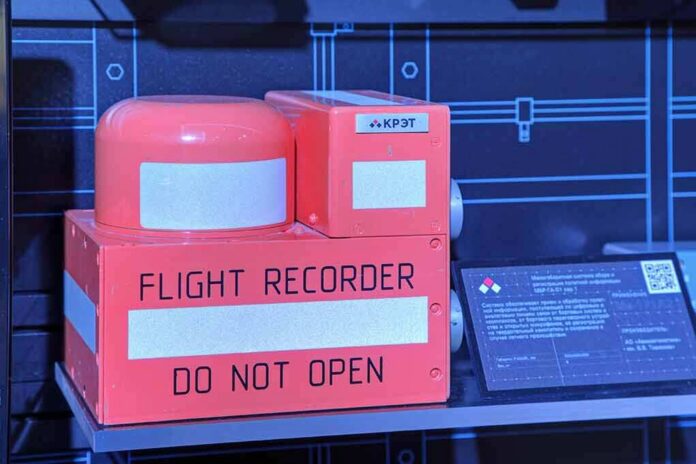
The cockpit voice recorder from the Nov. 1 Learjet 60 crash near Greenacres was found at the first impact point and is now under federal analysis.
Story Snapshot
- Investigators recovered the cockpit voice recorder at the initial impact site.
- The device is being evaluated at the National Transportation Safety Board laboratory in Washington, D.C..
- The crash killed all nine people on board after the jet went down near a busy roadway.
- The recorder is an evidentiary lead that can guide, but not replace, full investigative work.
Recorder Secured, Investigation Enters Its Next Phase
The National Transportation Safety Board confirmed it recovered the cockpit voice recorder from the Learjet 60 that crashed near Greenacres, Florida, on November 1. Investigators located the device at the site of initial impact and placed it into the agency’s standard processing stream. The recorder is now at the National Transportation Safety Board Vehicle Recorders Laboratory in Washington, D.C., where specialists will attempt to extract and analyze audio from the unit.
Officials said the crash killed all nine people on board after the jet came down near a busy roadway in Palm Beach County. The loss of life and urban location raise the stakes for a clear, fact-driven timeline. The recorder may capture crew communication, alarms, and ambient sounds that help anchor that timeline by the minute. That audio, if intact, can either confirm early leads or rule them out quickly in committee review.
What A Cockpit Voice Recorder Can And Cannot Tell Us
The cockpit voice recorder is not a magic answer key. It captures sound inside the cockpit and certain radio calls. It does not track every flight control or engine parameter. Federal guidance explains that after recovery, a dedicated committee prepares a transcript for investigative use. The National Transportation Safety Board does not release cockpit audio to the public by law, and will only release a written transcript when appropriate.
Many modern recorders loop about two hours of audio before overwrite, which can be enough for taxi, takeoff, and the accident sequence in a shorter flight. Damage, heat, or water can still limit what investigators can hear. That is why the agency treats recorder recovery as one tool among many. Wreckage mapping, weather data, radar tracks, and maintenance records carry equal weight when audio is thin or ambiguous.
How Investigators Will Use The Audio With Other Evidence
Analysts will match crew words to hard events. A callout about airspeed, a warning chime, or a checklist read can line up with radar speed changes or air traffic control logs. If the crew discussed weather, icing, or a system fault, that can steer component tests on recovered parts. If alarms sound without crew comments, that gap can signal workload spikes or rapid onset issues. Each clue earns or loses ground based on how well it fits the full record.
The National Transportation Safety Board (NTSB) announced on Monday that it has recovered the cockpit voice recorder (CVR) of the Learjet 60 that crashed last week near Greenacres, Florida, killing all nine people on board. https://t.co/77IDTkLkPd pic.twitter.com/669c8aKIEa
— FOX 13 Seattle (@fox13seattle) November 10, 2026
Early reports said the jet went down near a major road and that search teams focused on the main impact zone for key devices. The National Transportation Safety Board’s update confirms the voice recorder was found right there, not miles away, which helps bound the debris field and testing plan. That detail matters because it can support or challenge any claim of in-flight breakup versus ground-impact damage patterns as analysis continues.
Why Process And Patience Matter Here
Families and the public want answers fast, but aviation safety is built on method. The National Transportation Safety Board’s rules protect the integrity of the voice recorder material and the wider fact base during the study period. That discipline serves common sense and American conservative values: gather facts, keep the chain of custody clean, test claims against data, and publish a reasoned finding. The recorder’s recovery is real progress. The cause will come from the whole case, not one device.
Sources:
washingtontimes.com, ntsb.gov, news.com.au, aerotime.aero, uscode.house.gov, ecfr.gov
© restoreamericanglory.com 2026. All rights reserved.