
A regional train in Normandy jumped the rails and hurt 44 people, and investigators say a heavy rail fragment on the track is their leading clue.
Story Snapshot
- Investigators found a rail segment on the track; sabotage is a working theory.
- Forty-four people were injured; one passenger was evacuated in critical condition.
- The train carried 186 passengers on the Rouen-to-Caen route near Cléon.
- Police seized the train’s recorder and opened a judicial probe; the driver’s tests were negative.
What happened on the Rouen–Caen line
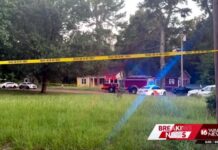
The Friday evening regional service from Rouen to Caen derailed near Cléon in Seine-Maritime. The train had 186 passengers on board when several carriages left the track and at least one tipped, injuring 44 people, including one in critical condition who was airlifted to a hospital. Officials activated a mass-casualty plan and sent more than one hundred firefighters and multiple medical teams. Hospitals in the area received patients for trauma checks and treatment as rescue crews stabilized the scene.
🚆 French police are investigating whether sabotage caused a train derailment in northwest France, injuring 44 people. A rail fragment found on the track has led investigators to treat malicious intent as the primary line of inquiry for the incident near Rouen. What are your…
— Headlines (@lordnewss) September 13, 2026
Police and prosecutors focused fast on a striking discovery at the site. A section of rail, described as a “segment of rail,” lay on one of the lines. Prosecutor Sébastien Gallois said that this object is the primary hypothesis for the cause of the derailment, while the reason it was there remains unclear. That single fact moved the investigation from routine accident checks toward possible criminal intent, which fits France’s recent worries over rail security.
Why sabotage is on the table, not the verdict
Authorities framed sabotage as an active line of inquiry. A police spokeswoman said the rail piece was probably linked to the crash, and investigators are testing whether its presence came from an accident or a deliberate act. That is a sharp but careful position. It flags intent as plausible while avoiding a rush to blame. Early casualty counts also shifted before settling at 44 injured, which is common in the first hours after a major incident.
Investigators seized the train’s event recorder, the “black box,” and a court appointed an expert to analyze evidence. Police planned numerous interviews, including with crew, responders, and nearby workers or residents. Initial tests showed the injured driver had no alcohol or drugs in his system, which reduces human impairment as a likely cause. These steps match how French judicial probes build a timeline: speed, braking, alarms, radio calls, and track conditions.
Where the facts point next
The rail segment is the hinge. If it fell from work stock, maintenance, or transport, investigators will find matching tool marks, paint transfer, or vehicle records. If someone carried and placed it, they will look for prints, fibers, recent cuts, and abrasion patterns on both the fragment and the running rail. The court expert’s report, along with data from the recorder, should show train speed, brake effort, and the moment of contact with the obstacle.
France train derailment leaves at least 44 injured – BBC News https://t.co/Uiy8wKDtEP
The officials said 186 passengers were on board the train that was operating between Rouen and Caen in Normandy.
The cause of the crash was not immediately known, but reports in the French…
— matiere* (@matiere) September 13, 2026
France’s rail network has faced sabotage before, including arson that hit signaling and fiber systems ahead of the 2024 Games, which raised the baseline for threat awareness nationwide. That backdrop explains why a stray rail piece triggers a criminal lane of inquiry, even as forensic work continues. Common sense says start with the hard facts that can be tested: object on the track; clean driver tests; recorded train data; and a scene rich with physical clues.
Public safety, trust, and the work of proof
Emergency teams did what they train to do. Firefighters triaged, stabilized, and moved the most hurt fast, and hospitals scaled up to receive the surge. That response likely kept the toll from rising. The next job is patient evidence. If sabotage happened, the public needs a clear chain of proof. If it did not, clarity still matters. American readers will recognize the standard here: follow the evidence, name the cause, and fix the gap so families can ride without fear.
Sources:
redstate.com, abcnews.com, connexionfrance.com, pollar.news, nampa.org, the-independent.com
© restoreamericanglory.com 2026. All rights reserved.