The Marine pilot walked out alive from a flaming canyon crash because he hit the handle in time.
Story Snapshot
- A Marine F/A-18 crashed near Rimrock Lake; the pilot ejected and survived.
- Deputies and local responders located the injured pilot after ejection.
- The crash sparked a wildfire; no civilian injuries were reported in coverage.
- The Marine Corps labeled it a non-fatal training mishap under investigation.
A routine training flight turned into a survivable crash
The Marine Corps reported that an F/A-18 on a training mission crashed near Rimrock Lake in Yakima County around midday on June 13, 2026. The pilot ejected and survived, and the service characterized the event as a non-fatal aviation mishap while the cause remains under investigation. Local reports placed the first calls to the Yakima County Sheriff’s Office around 12:15 p.m., with responders converging on steep terrain and scattered fire as smoke rose over the lake area.
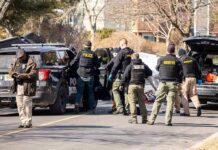
Deputies and rescuers found the downed pilot with visible injuries but able to walk, according to broadcast reports and later video segments. Footage published by national and Seattle outlets shows officers contacting the aviator after ejection and arranging aid. Those outlets describe the pilot as bloody, dazed, and asking for help, but alive and moving under his own power. Reporters attributed the recovery to the sheriff’s office and local responders who reached him after the seat fired.
Time, place, and unit details fit a consistent picture
Coverage across multiple outlets aligns on the where and when. The jet went down near Rimrock Lake in Yakima County around noon to 12:15 p.m. on June 13. Marine Aircraft Group 11 under the 3rd Marine Aircraft Wing was identified as the parent organization in contemporaneous reporting. Later aviation analysis tagged the airframe as an F/A-18D assigned to the “Death Rattlers,” but the core news accounts stayed with the Hornet identification and the wing affiliation, which matches the Marine release language.
The Aviationist’s write-up tied the flight to a known low-level training route in Washington and noted the pilot ejected and was recovered by local law enforcement. That framing aligns with the broad Marine description of routine training and a non-fatal mishap, while leaving the exact failure mode open pending the formal safety investigation. The shared backbone across these reports is simple: training sortie, sudden crash, clean ejection, and a live pilot on the ground.
Fire on the hillside, but no civilians hurt in reported accounts
The aircraft impact ignited a wildfire that drew state and federal firefighting resources. Reporters on the ground described smoke columns and temporary closures around recreation areas near the lake. Despite the flames and the rugged terrain, outlets covering the incident cited no civilian injuries. Fire crews focused on containment while deputies and medics managed the pilot’s recovery and transport for evaluation of reported minor injuries, according to contemporaneous coverage.
This is the June 13, 2026 crash of a U.S. Marine Corps F/A-18D Hornet near Rimrock Lake in Washington, The remarkable part of the story is actually that the pilot survived an ejection over rugged mountainous terrain, while the aircraft was destroyed and started a forest fire.
— Democracy Unmasked (@DemocracyUnmask) August 15, 2026
The survival moment is dramatic, but it tracks with what decades of ejection data already show. When pilots eject within the performance “envelope” of modern seats—speed, altitude, and attitude in a workable range—survival rates approach the mid to high 90s. Medical studies and defense records place overall ejection survival around nine in ten cases, with the best odds when the pilot reacts early and the seat performs as designed. That appears to be what happened here: decisive pull, proper seat function, and a live walkout.
What this says about training risk and readiness
Military flying asks crews to train as they would fight, which means low-level routes and high workload. The public often sees the fireball and the wreckage and wonders why they fly that low at all. The answer is straightforward: terrain masking and timing matter in combat, and you cannot learn that at 20,000 feet. The American conservative instinct favors preparedness with discipline. That starts with realistic reps, safety gear that works, and commanders who back both. This mishap shows all three in motion.
Local law enforcement and Marine coordination offer a second lesson: relationships save minutes, and minutes save lives. Deputies reached a bleeding pilot fast because the lines between base and county were already clear. That is how you want America to work—federal and local hands pulling the same rope without drama. The Marine Corps says investigators are doing the methodical work now, which is normal and necessary. One crisp caveat remains: the service has not released a cause, and responsible voices should wait for that record before drawing technical conclusions.
Bottom line: the handle worked, the team worked, the pilot lived
The facts hold steady across the reporting. A Marine Hornet crashed near Rimrock Lake around noon. The pilot ejected, survived with minor injuries, and met deputies and medics who got him out. The crash lit a hillside but, in the accounts cited, hurt no one on the ground. The Marine Corps labeled it a non-fatal mishap and launched the standard investigation. That is how a very bad day becomes a survivable one—by design, by training, and by fast hands on scene.
Sources:
migflug.com, katu.com, abcnews.com, duboisaviation.com, theaviationist.com
© restoreamericanglory.com 2026. All rights reserved.