
A 140-year-old Buffalo church complex has burned not once but twice in less than a year, and investigators just ruled the latest blaze arson, right as a fight over turning the property into a mosque reaches a boiling point.
Story Snapshot
- Buffalo officials confirmed a fire at the former St. Ann’s Catholic Church complex was intentionally set.
- The blaze followed an earlier four-alarm fire months before that gutted the adjoining school building.
- The church sits at the center of a redevelopment dispute that includes a proposed mosque conversion.
- Mayor Sean Ryan says the city will not spend $2 million to demolish the damaged site.
- No suspect or motive has been publicly named in either fire.
A Second Fire, A Confirmed Arson Finding
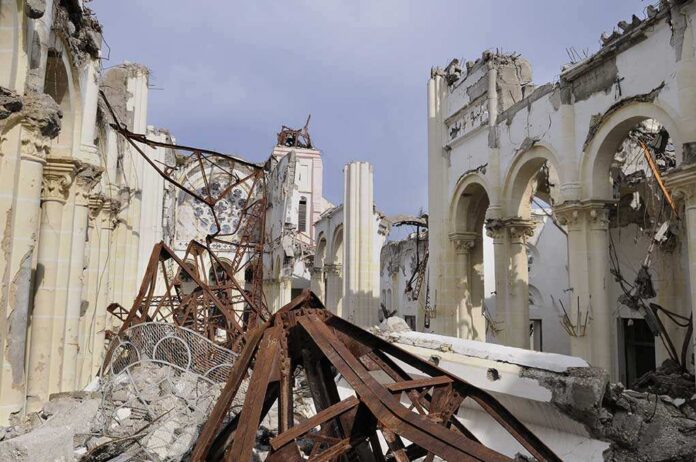
Buffalo fire officials determined the most recent fire at the former St. Ann’s Church was arson, a finding that came four days after crews battled a three-alarm blaze at the site. That fire hit the same East Side complex roughly six months after an earlier four-alarm fire tore through the property. Two major fires at one historic church site in under a year is not something investigators wave off as coincidence.
🚨🚨BREAKING NEWS 🚨
🇺🇸 Second Blaze Hits 140-Year-Old St. Ann’s in a Week as Conversion Push Intensifies
A 140-year-old church in Buffalo, New York, has suffered its second fire in seven days. St. Ann Church was hit by what authorities are investigating as arson, coming just… pic.twitter.com/aA6MmJKQna
— Corefrontline (@corefrontline) July 23, 2026
The first fire, back in January, gutted the former school building on Emslie Street, leaving it a roofless shell after flames engulfed the top floor and roof. Reporting at the time noted the church sanctuary itself survived that blaze largely untouched, with the damage concentrated in the adjacent school structure. That distinction matters, because it shows the complex has now absorbed repeated hits without ever fully losing its main worship space.
A Property Already Fighting Over Its Future
The fires did not happen in a vacuum. St. Ann’s had already become a flashpoint over what should happen to the shuttered Catholic property, with a proposal on the table to convert it for use as a mosque. That plan turned a routine preservation debate into a much more emotional local argument, one that spilled onto social media the moment flames appeared for a second time.
Buffalo Mayor Sean Ryan added another wrinkle to the saga, announcing the city will not foot the bill to tear the building down, estimating demolition costs near two million dollars and telling residents “taxpayers will bear the cost” if the city moves forward. That decision leaves the burned-out complex standing, unresolved, while the ownership and redevelopment questions remain very much alive.
Church Fires Follow a Familiar, Cautious Pattern
Buffalo’s case fits a pattern seen in other historic church fires across North America and beyond. In Toronto, the Anglican Diocese confirmed St. Anne’s Church fire was being treated as suspected arson only after a lengthy investigation stretching well over a year past the original blaze. In Idaho, federal investigators similarly took time before concluding a fire that destroyed St. Ann Church near the Canadian border was arson.
BREAKING: 140-year-old St. Ann church set on fire in Buffalo, NY
Cause determined to be arson pic.twitter.com/LlA1n5MNsp
— THE GREAT AWAKENING (@Q_1776_United) July 23, 2026
That pattern matters here. Fire officials generally separate the technical finding of “arson,” meaning a fire was intentionally set, from the much harder question of who did it and why. Buffalo investigators have confirmed the intentional cause. They have not named a suspect or a motive, and no evidence publicly ties the fire directly to the mosque conversion dispute, however tempting that connection may feel to residents watching the story unfold online.
That gap between confirmed fact and speculation deserves respect. Conservative-minded readers who value due process should welcome a clear-eyed distinction here: the arson finding is real and serious, the property fight is real and contentious, but linking them as cause and effect without evidence gets ahead of what investigators have actually said. Buffalo residents deserve a full accounting, not a rush to conclusions on either side.
What happens next likely hinges on whatever the arson investigation turns up in the coming weeks. Until then, a landmark church built to serve generations of Catholic families in Buffalo sits scorched and unresolved, caught between a fire investigation, a stalled demolition decision, and a community still arguing over who gets to decide its future.
Sources:
thegatewaypundit.com, youtube.com, yahoo.com, toronto.anglican.ca, ncronline.org
© restoreamericanglory.com 2026. All rights reserved.