
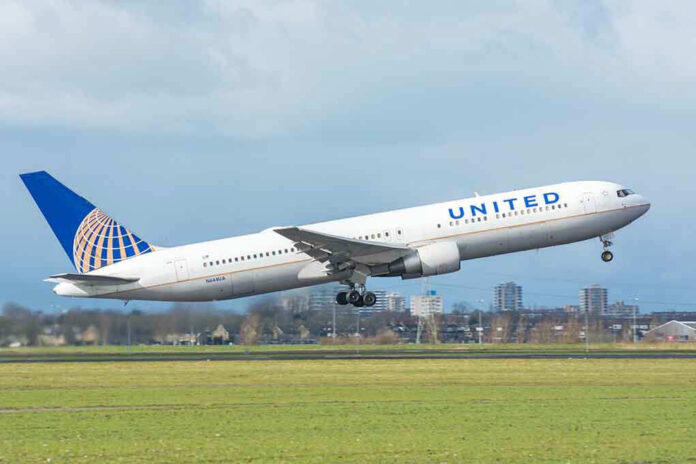
One man’s words at 30,000 feet turned a routine flight into a national security test, raising the question: how ready are we for the unpredictable dangers of modern air travel?
Story Snapshot
- A bomb threat from a passenger diverted United Airlines Flight UA380 to St. Louis, triggering a swift emergency response.
- No injuries occurred, but all passengers were evacuated and the suspect was arrested after the threat proved unfounded.
- The incident exposed both vulnerabilities and strengths in aviation security and crisis management.
- Industry experts and officials are re-examining protocols as disruptive threats trend upward.
One Passenger, One Sentence, and an Entire Flight Diverted
United Airlines Flight UA380 took off from Dallas on a quiet Sunday morning, bound for Chicago. At cruising altitude, a 26-year-old male passenger declared there was a bomb in his wife’s luggage. The cabin crew, trained for every possible crisis, didn’t hesitate. The pilots immediately declared a general emergency and changed course for St. Louis Lambert International Airport, a major hub ready for the unexpected. The threat wasn’t just a disruption; it was a full-scale test of aviation security and emergency response procedures. As the aircraft touched down on runway 29, responders mobilized—every second counted.
Passengers evacuated to the B concourse, leaving behind carry-ons and assumptions about air travel’s safety. Law enforcement, including a bomb and arson unit, swept the aircraft. The threat, it turned out, was a hoax—no bomb was found. But the disruption was real, rippling through airport schedules and the minds of everyone on board. The suspect was arrested without resistance, but the motive remained a mystery. In the aftermath, airport director Rhonda Hamm-Niebruegge commended the coordinated response and confirmed no injuries—a testament to practiced preparedness in an era where unpredictability is the new normal.
Aviation Security: Lessons from a False Alarm
Bomb threats in commercial aviation are rare, but even the hint of danger mobilizes a formidable apparatus. Security protocols honed since the early 2000s kicked in: pilots took command, the airport’s emergency command center activated, and law enforcement moved quickly. United Airlines, one of the nation’s largest carriers, followed its playbook, prioritizing passenger safety above all else. Lambert St. Louis International’s infrastructure and training faced a real-world test, and by all accounts, passed. The incident mirrored other recent disruptions, including a Jet 2 scare in Merseyside, fueling debates about the adequacy of current screening and threat assessment procedures. Each event adds pressure for more robust measures, balanced against the need for efficiency and passenger comfort.
United flight forced to make emergency landing in St Louis after passenger made bomb threat, report says | The Independent https://t.co/RtJBITyoV0
— FireandAviation TV (@FireandAviation) November 17, 2025
Heightened passenger volume post-pandemic has correlated with a rise in disruptive behavior. Experts point to a broader trend: threats—real or false—are more common, and so is the scrutiny they attract. While most bomb threats are ultimately hoaxes, their impact is measured in operational delays, economic losses, and psychological strain on travelers and staff. Airlines and airports, already under the microscope, must now contend with the reality that even false alarms can cause significant upheaval. As airlines review their incident reports and emergency manuals, they walk a tightrope between vigilance and overreaction, aware that public trust hinges on both perception and performance.
Stakeholders and the Ripple Effects of a Single Threat
The UA380 incident put every stakeholder under the spotlight. United Airlines had to manage passenger safety, operational disruption, and reputational risk—all at once. Passengers and crew became unwilling participants in a high-stakes exercise, their routine journey transformed by the words of a single individual. Airport authorities, led by Hamm-Niebruegge, coordinated the response and communicated with the public, while law enforcement took control of the investigation and the suspect. The power dynamic was clear: pilots and emergency managers made the calls, but every action was scrutinized by the flying public and media alike. The question of the suspect’s motivation remains open, but the consequences for all involved are lasting.
For United Airlines, the challenge is not just resolving a single crisis, but preventing the next one. The company must reassure customers while working with regulators and law enforcement to refine protocols. The airport staff, from first responders to concourse attendants, demonstrated the value of training and clear authority in chaos. For passengers, the psychological impact lingers: every boarding announcement and overhead bin check now carries new weight. The broader community faces renewed debates about the price of security, privacy, and the psychological toll of travel in an age of heightened threats.
Industry Implications and the Future of Air Travel Safety
Short-term consequences were immediate: delays rippled through St. Louis, and a sense of unease followed passengers to their next destinations. Long-term, the incident may reshape how airlines and airports screen passengers, address mental health concerns, and communicate in crises. Aviation security experts call for faster threat assessment tools and smarter screening, but caution against measures that alienate the flying public. Academic voices highlight the trauma such events inflict, even when no physical harm occurs. The incident’s legacy will be policy reviews, new drills, and possibly more visible security—visible reminders of an industry forever preparing for the unpredictable.
Industry leaders, including United Airlines and airport officials, now balance two imperatives: ensuring public confidence and adapting to a threat landscape that keeps evolving. While the UA380 bomb threat resolved without injury or destruction, its impact—on protocols, on nerves, and on the public conversation—will linger. Every flight since has reminded passengers and crew that security is not just about technology or policy, but about readiness, resolve, and the capacity to act decisively when the stakes are highest.