

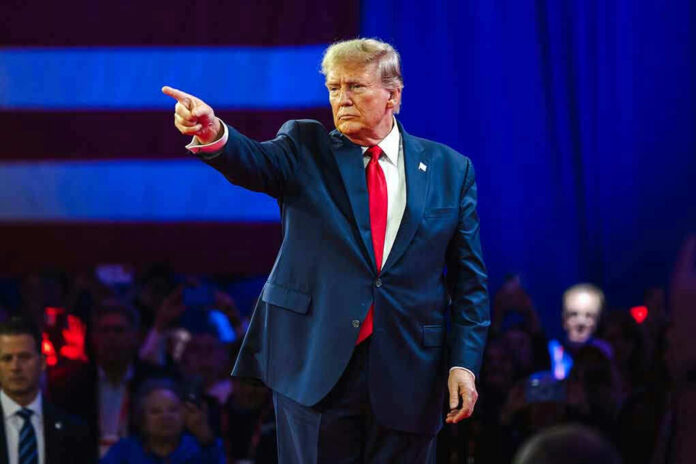
Donald Trump, a president known for shattering norms, now stands at the edge of the world’s most coveted honor—the Nobel Peace Prize—while the global community debates whether his claims of ending ‘seven wars’ are fact or fiction.
Story Snapshot
- Trump’s Nobel Peace Prize nomination sparks global controversy and curiosity.
- The claim of ending ‘seven wars’ remains heavily disputed among experts and critics.
- Nomination processes and political motivations behind Trump’s candidacy are under scrutiny.
- Despite slim odds, Trump’s polarizing legacy keeps his Nobel candidacy a live question for many.
The Mechanics and Mystique of Trump’s Nobel Nomination
Donald Trump’s pursuit of the Nobel Peace Prize turns the spotlight onto an often opaque nomination process. Anyone serving in a national assembly, on a government, or as a university professor in certain fields can technically nominate a candidate, making the pool of potential nominators vast and unpredictable. For Trump, several Norwegian lawmakers and international figures have reportedly submitted his name, often citing his diplomatic efforts in the Middle East and North Korea as justification. These nominations, while valid under Nobel guidelines, do not guarantee serious consideration by the Norwegian Nobel Committee, which operates independently and evaluates a nominee’s actual impact on peace, not mere intent or publicity.
Scrutiny over Trump’s nomination arises not just from the process but from the substance of his peace claims. The assertion that Trump ended ‘seven wars’ has been met with skepticism and outright contradiction from conflict analysts, journalists, and foreign policy experts. Many of the conflicts cited—including Afghanistan, Iraq, and Syria—continue in various forms, with violence, instability, and active military operations persisting despite official troop withdrawals or policy announcements. While Trump’s administration did broker the Abraham Accords, normalizing relations between Israel and several Arab states, critics argue that these agreements addressed only specific regional tensions, leaving wider conflicts unresolved.
Fact-Checking Presidential Claims: The ‘Seven Wars’ Debate
Trump’s narrative of peace hinges on a controversial accounting of military engagements. He often refers to the drawdown of troops and negotiated ceasefires as evidence of ending wars, but independent reporting reveals that many operations simply shifted tactics or saw temporary pauses rather than true resolution. In Afghanistan, the U.S. signed a withdrawal agreement with the Taliban, yet violence continued as local power struggles intensified. In Iraq and Syria, the so-called defeat of ISIS did not mean the end of hostilities, as insurgent activity and humanitarian crises persisted. Thus, the claim of ending ‘seven wars’ remains an open debate, with most experts agreeing that the conflicts are far from resolved and that peace is a process, not a proclamation.
FOX NEWS: Do you think President Trump deserves the Nobel Peace Prize?
FETTERMAN: If this sticks. I think the whole point of having a Nobel Peace Prize is for ending wars and promoting peace. And if he brings the Ukrainian war to its end, I will be the Democrat leading the… pic.twitter.com/eOGVPH2lMW
— Aaron Rupar (@atrupar) October 9, 2025
Supporters of the Nobel nomination argue that Trump’s unconventional diplomacy deserves recognition for challenging the status quo and forcing new conversations in international relations. Detractors counter that awarding the prize would undermine the Nobel’s intent, which is to honor lasting, transformative contributions to peace. The split reflects deeper political and philosophical divides about what constitutes real peace in the modern era.
The Politics and Symbolism Behind the Nobel Prize
The Nobel Peace Prize has always carried symbolic weight, often awarded to figures who represent breakthroughs in dialogue, reconciliation, or humanitarian work. Trump’s candidacy tests the boundaries of this tradition, forcing the Nobel Committee—and the world—to confront whether controversial figures with divisive legacies can merit such honor. Previous Nobel decisions, from Barack Obama’s win in 2009 to the prize awarded to organizations like the World Food Programme, show that the committee values both symbolism and substance, sometimes sparking backlash when the recipient’s achievements seem premature or incomplete.
As Trump’s Nobel saga unfolds, the outcome remains uncertain. The committee’s deliberations are confidential, and nominees are not officially disclosed for fifty years unless publicized by nominators or the media. For Trump, the speculation itself serves as both a political tool and a reflection of his enduring impact on global discourse. Whether he wins or not, the conversation around his nomination reveals much about the intersection of politics, peace, and international prestige in the twenty-first century.
Sources:
Luna formally nominates Trump for Nobel Peace Prize
Zelenskyy: If Trump gives us Tomahawks, we’ll lobby for Nobel Peace Prize