President Trump called off a planned military strike on Iran after convincing himself that reports of the regime halting mass executions warranted a reprieve, but kept his finger hovering over the trigger.
Story Highlights
- Trump canceled Iran strike after regime allegedly halted 800 scheduled executions of protesters
- Decision came amid Iran’s bloodiest protests since 1979 revolution with thousands killed
- Israeli Prime Minister Netanyahu urged delay, fearing insufficient strike wouldn’t destabilize regime
- Trump emphasized personal decision-making, rejecting claims of external persuasion
- Military options remain on table if Iranian violence against protesters resumes
The Execution Reprieve That Changed Everything
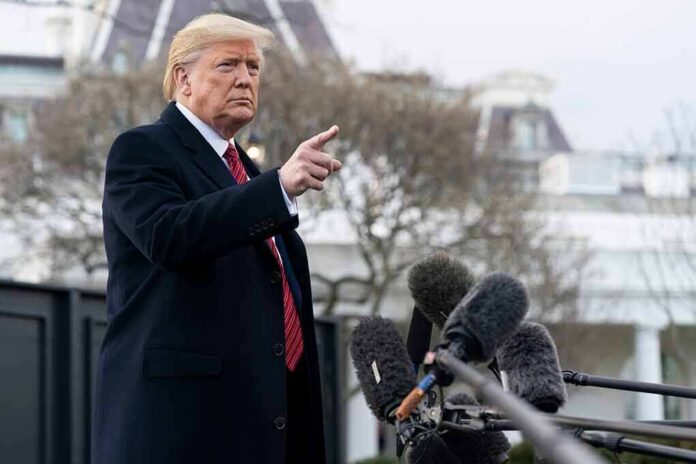
Trump’s decision hinged on intelligence reports suggesting Iran canceled hundreds of planned hangings scheduled for protesters. The President told reporters outside the White House that Iran’s decision to halt “800 executions that were supposed to take place” had “a big impact” on his thinking. White House Press Secretary Karoline Leavitt confirmed the administration was monitoring reports of halted killings and executions, warning of grave consequences if the violence resumed.
The timing proved crucial as Iran faced its most severe internal crisis since the Islamic Revolution. Economic collapse, fueled partly by Trump’s reimposed sanctions after withdrawing from the nuclear deal, sparked nationwide protests that claimed thousands of lives. The regime’s brutal crackdown through the Islamic Revolutionary Guard Corps and militia forces had drawn international condemnation and Trump’s strike threats.
Netanyahu’s Strategic Intervention
Behind the scenes, Israeli Prime Minister Benjamin Netanyahu reportedly urged Trump to delay the attack during a January 15th phone call. Israeli concerns centered on the strike’s potential ineffectiveness rather than opposition to military action altogether. Sources suggested Netanyahu worried that limited strikes on military sites wouldn’t achieve the desired goal of destabilizing the Iranian regime, while potentially triggering dangerous retaliation against regional U.S. and Israeli assets.
The Israeli leader’s influence reflects the complex calculations surrounding any military action against Iran. With Iran’s nuclear program already significantly damaged by previous U.S. and Israeli strikes in 2025, the focus shifted to the regime’s domestic repression. Yet military experts questioned whether external intervention could successfully democratize Iran or merely inflame regional tensions without achieving lasting change.
Personal Decision Amid Political Pressure
Trump adamantly rejected suggestions that allies convinced him to stand down, insisting “Nobody convinced me. I convinced myself.” This assertion underscores his preference for direct decision-making and distrust of intermediaries in sensitive negotiations. The President’s emphasis on personal agency aligns with his broader approach to foreign policy, where he often bypasses traditional diplomatic channels in favor of direct leader-to-leader communication.
TRUMP: I convinced myself not to attack Iran yethttps://t.co/koRI5N8IcW
— ConspiracyDailyUpdat (@conspiracydup) January 16, 2026
Arab allies had also reportedly appealed against the strike, seeking regional stability amid ongoing tensions from the October 2023 Hamas attacks and subsequent conflicts. Their concerns reflected broader Middle Eastern dynamics where even U.S. partners sought measured responses to avoid escalating proxy conflicts and missile threats that could destabilize energy markets and trade routes.
Uncertain Path Forward
The reprieve leaves fundamental U.S.-Iran hostilities unresolved while protesters remain vulnerable to renewed crackdowns. Iranian exile leader Reza Pahlavi described the regime as “on the verge of collapse,” suggesting the current violence represents desperate last-gasps of a failing system. His calls for non-violent transition and positioning as a “neutral arbiter” highlight opposition hopes for regime change without external military intervention.
Trump’s decision reflects pragmatic restraint while maintaining credible deterrence. The administration’s “wait and see” approach keeps military options available if Iranian violence resumes, but avoids immediate escalation that could spiral beyond control. This careful balance demonstrates how even hardline positions must adapt to rapidly changing circumstances where miscalculation could trigger broader regional warfare with unpredictable consequences.
Sources:
For Now, the US Holds Off on Attacking Iran – Stimson Center