When a sitting president demands the firing of a late-night comedian and a federal regulator amplifies the call, the line between political power and media freedom blurs in ways that should make every American pause.
Story Snapshot
- President Trump’s public demand for NBC to fire Seth Meyers ignites a national debate on free speech and political power.
- FCC Commissioner Brendan Carr’s repost of Trump’s demand raises alarms about regulatory overreach and government-media boundaries.
- The controversy is fueled by Meyers’ critical monologues referencing newly released Epstein emails, escalating ongoing tensions between the Trump administration and late-night television.
- Legal experts and media analysts warn of dangerous precedents and the erosion of traditional safeguards protecting journalistic independence.
The President, the Comedian, and the Regulatory Megaphone
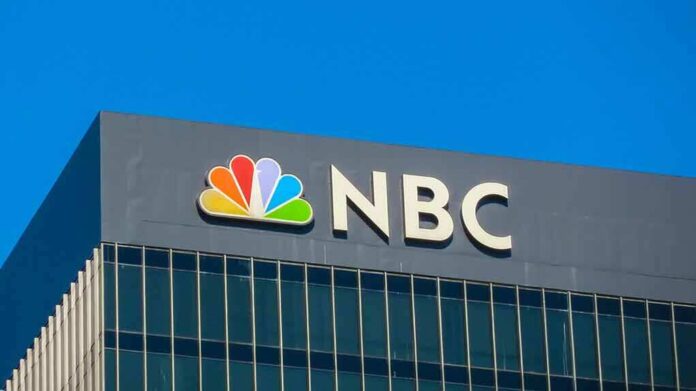
November 15, 2025, marked a new flashpoint in America’s culture war. As millions tuned in to “Late Night with Seth Meyers,” the host’s sharp monologues targeted President Trump with surgical precision, referencing the explosive new batch of Jeffrey Epstein emails. What happened next stunned even hardened media veterans: President Trump, on his own Truth Social platform, told NBC to fire Meyers, branding the comic as suffering from “Trump Derangement Syndrome” and the show as a “ratings disaster.” Within hours, FCC Commissioner Brendan Carr reposted Trump’s demand on X, the platform formerly known as Twitter. With a single repost, a federal regulator amplified the President’s desire, igniting speculation about whether regulatory muscle was being flexed against a critical media voice.
The spectacle didn’t end with Trump’s post and Carr’s endorsement. News outlets across the spectrum leapt on the story, dissecting not just the political theater, but the deeper implications for how government power can—and perhaps should—interact with the media. This wasn’t Trump’s first swipe at late-night TV; Meyers, Jimmy Kimmel, and Stephen Colbert have all weathered presidential jabs. But never before had an FCC commissioner so publicly echoed a president’s call for a network to jettison a satirical critic. The escalation was unmistakable, and the threat to media independence impossible to ignore.
Political Satire Meets Political Power: The Road to November 2025
Trump’s antagonism toward late-night hosts has become as much a fixture of American politics as the opening monologue itself. His grievances stretch back to his first term, with regular salvos launched against perceived media bias and personal slights. Seth Meyers, a former “Weekend Update” anchor on Saturday Night Live, has been a frequent Trump target, especially for his relentless “A Closer Look” segments dissecting Trump’s scandals and policies. The latest round of controversy erupted as Meyers riffed on the release of Epstein-related emails, some of which referenced Trump’s past associations. These segments aired just as the House Oversight Committee prepared to vote on releasing the full Epstein files—raising the stakes for both Meyers and the White House.
Trump’s November 15 post was not an isolated tantrum. Earlier in 2025, the president had publicly threatened NBC for renewing Meyers’ contract and warned Comcast, NBC’s parent company, of undefined “consequences.” In September, FCC’s Brendan Carr had similarly threatened ABC over content from Jimmy Kimmel, a move that led to a temporary suspension of “Jimmy Kimmel Live!” These events set the stage for the current drama, with NBC now caught between executive branch ire, FCC scrutiny, and the economic realities of late-night television advertising.
Donald Trump Calls For Late-Night Host Seth Meyers To Be Fired, And This Time, FCC Chairman Reposts POTUS’ Demand AMERICA SAYS YOFIRE PEDO-FELON TRUMP https://t.co/fXveKIBGhk via @@Yahoo
— CC (concerned citizen). 💙🇺🇸🦅 (@Wille2k) November 17, 2025
Free Speech, Censorship, and the Regulatory Crossfire
With the president and an FCC commissioner both turning up the heat, legal and media experts sounded the alarm. Media analysts called the episode a “dangerous precedent,” warning that regulatory officials appearing to coordinate with political leaders to target specific journalists or entertainers could chill free expression. Constitutional scholars underscored the First Amendment risks, arguing that government efforts to pressure private broadcasters to fire their critics may cross into the territory of unconstitutional censorship. The involvement of an FCC commissioner, whose agency holds significant power over broadcast licenses, made the threat more than rhetorical.
The controversy also exposed fault lines in American society: Trump supporters cheered the move, insisting late-night hosts are unaccountable partisan actors who should face consequences for their “defamatory” content. In contrast, free speech advocates and media watchdogs decried the episode as a direct attack on journalistic independence and a free press. NBC, for its part, faced impossible choices—balancing commercial interests, regulatory risk, and the optics of caving to political pressure. As of November 16, neither NBC nor Meyers had publicly responded, but expectations ran high that Meyers would address the firestorm in his next broadcast.
Long-Term Ripples: What Happens When the Lines Blur?
The short-term effects are already visible: NBC and Meyers are under the microscope; other late-night hosts are feeling the chill; and political satire faces a new era of heightened risk. The long-term implications, however, are even more ominous. If regulatory officials feel emboldened to publicly pressure networks over the content of their programming, the boundary between government oversight and political censorship grows dangerously thin. Legal experts warn that such a precedent, once set, will prove difficult to reverse—threatening not just comedians, but any journalist or broadcaster who dares to cross the powers that be.
Against this backdrop, the nation’s eyes turn to forthcoming developments: the House Committee’s vote on the Epstein files, NBC’s eventual response, and Meyers’ anticipated return to the studio desk. The fate of one late-night host may soon become a bellwether for the future of media freedom in an increasingly politicized America. The stakes could not be clearer—or higher.
Sources:
Trump Demands NBC Fire Host Seth Meyers
President Trump Calls for Seth Meyers’ Firing
Trump’s “Fire Seth Meyers” Diktat Shakes NBC; FCC’s Brenden Carr Enters Fight Again