

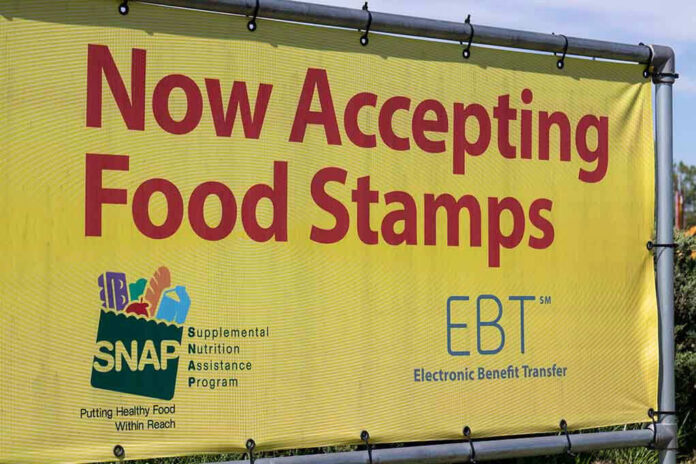
One government shutdown, forty-one million empty dinner plates—when politics starve America, the cost is not just measured in dollars, but in dignity and daily bread.
Story Highlights
- 41 million Americans face the loss of food benefits as a federal shutdown looms.
- October SNAP payments are safe, but November and beyond are uncertain without congressional action.
- SNAP, WIC, and child nutrition programs all hang in the balance, echoing crises from previous shutdowns.
- Political gridlock puts vulnerable families, children, and seniors at risk of hunger and hardship.
Political Brinkmanship Threatens the Nation’s Food Lifeline
Congress is at an impasse, and the budget clock ticks down. At midnight, federal funding evaporates if lawmakers do not move. For 41 million Americans, that bureaucratic midnight could mean the end of their food assistance—an invisible guillotine falling on family dinner tables. SNAP, the Supplemental Nutrition Assistance Program, is the nation’s largest anti-hunger effort, feeding low-income families since the 1960s. Yet its existence is never guaranteed—Congress must re-approve funding every year, and failure to do so triggers a shutdown that severs the flow of benefits.
October benefits are expected to arrive, thanks to a contingency maneuver that obligates funds before the deadline. But this trick is a one-time shield. If the shutdown extends beyond October, November’s benefits hang in the balance. For millions, this means uncertainty at the checkout line, anxiety at the dinner table, and the threat of hunger just as autumn’s chill sets in. The system’s fragility is on full display: federal funding, political gamesmanship, and the lives of America’s most vulnerable are tightly interwoven.
SNAP and WIC: Vital Programs in the Crosshairs
SNAP is not alone on the chopping block. The Women, Infants, and Children (WIC) program and child nutrition efforts face even grimmer odds. WIC’s funding is less flexible, and contingency planning provides little reassurance. State agencies scramble to communicate with recipients, but the message is bleak: October’s assistance will arrive, but no promises exist for November. Grocery stores dependent on SNAP dollars brace for reduced sales, while food banks anticipate a tidal wave of new clients. The infrastructure designed to feed America’s poorest is robust in mission, but brittle in funding.
Food banks and community organizations become the last line of defense. Their shelves, already strained by demand, will be tested if federal benefits lapse. In 2019, a similar shutdown forced emergency measures and improvisation. But that crisis was brief—this time, there is no guarantee of a swift resolution. The question lingers: how long can non-profits and local governments shoulder the burden if Washington fails to act?
Unraveling the Power Dynamics: Who Holds the Keys?
Congress alone controls the purse strings. The USDA and state agencies are left to implement or explain, powerless to conjure funds from thin air. SNAP recipients—families, children, seniors, and the disabled—wait for news from leaders who may never face hunger themselves. Advocacy groups like the Food Research & Action Center (FRAC) and policy analysts sound alarms, warning of cascading economic and social fallout. Local grocers, reliant on SNAP spending, brace for a hit to their bottom line. Every stakeholder is aware: the longer the shutdown, the greater the damage.
The history is instructive. During the 2019 shutdown, contingency plans and political pressure ensured that benefits were only briefly interrupted. But the stakes have grown higher, and the political divide has widened. This year, the USDA’s silence on updated contingency plans signals uncertainty, not confidence. Critics on both sides of the aisle argue for reforms: some want to decouple essential programs from annual budget brinkmanship, while others insist on stricter controls and more robust emergency reserves. The result is gridlock, with America’s poorest left as hostages to high-stakes negotiations.
Hunger as a Political Weapon: The Road Ahead
Short-term, the crisis is delayed, not averted. October benefits will arrive, but November’s are a roll of the dice. For children, seniors, and those already living on the edge, this is more than politics—it is survival. Economists predict ripple effects on local economies, especially in rural and low-income communities. Food insecurity, already a persistent American shame, could spike. Retailers lose customers, food banks run dry, and public health suffers as nutrition vanishes from dinner plates.
The enduring lesson is clear: tying basic human needs to political deadlines is a recipe for disaster. Until Congress finds a way to insulate food assistance from budget battles, millions will continue to face this recurring nightmare. The next chapter will be written not in congressional hearing rooms, but in grocery stores, food pantries, and family kitchens across the nation.
Sources:
Food Research & Action Center (FRAC) blog, September 27, 2025