
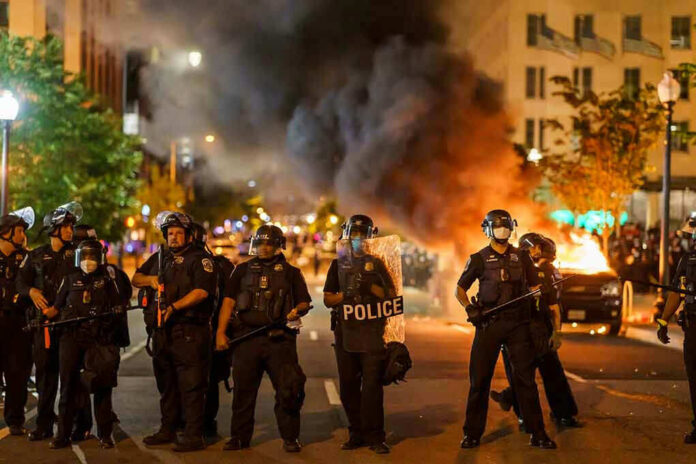
Flames erupted outside Albania’s Prime Minister’s offices as protesters hurled Molotov cocktails, exposing raw fury against a leader accused of corruption and power abuse.
Story Snapshot
- Democratic Party supporters clashed with police in Tirana on Monday evening, escalating to firebombs at Edi Rama’s offices.
- Molotov cocktails ignited flames, symbolizing deep public discontent with Rama’s Socialist government.
- Police struggled to contain the crowd, highlighting tensions in Albania’s polarized politics.
- The protest underscores ongoing battles over alleged electoral fraud and governance failures.
- AP footage captured the chaos, revealing a nation on edge.
Protesters Ignite Tirana Streets
Supporters of Albania’s Democratic Party gathered in Tirana on Monday evening. They targeted the offices of Prime Minister Edi Rama. Police formed lines to block their advance. Tensions boiled over quickly. Protesters threw Molotov cocktails, sparking visible flames against the building. The Associated Press video by Florent Bajrami documented the fire and fury firsthand.
Edi Rama, leader of the Socialist Party, has governed since 2013. Critics accuse him of consolidating power through judicial reforms and media control. The Democratic Party, led by Sali Berisha, rallies opposition. They claim Rama rigs elections and stifles dissent. Monday’s protest marked a violent peak in months of demonstrations. Common sense demands accountability when flames replace ballots.
Democratic Party’s Long-Standing Grievances
Albania’s Democratic Party organized the rally to demand Rama’s resignation. They cite corruption scandals engulfing his administration. Protesters chanted against electoral manipulation in recent votes. Police used barriers and tear gas to hold the line. Yet, some breached defenses, lobbing firebombs that lit up the night. This escalation reflects frustration with unaddressed reforms.
Berisha, a former prime minister, faces U.S. sanctions for alleged corruption ties. His supporters view these as politically motivated. Rama’s government pushes EU integration, but opponents argue it masks authoritarian drift. American conservative values prioritize free elections and limited government. Facts show Albania’s democracy strains under one-party dominance. Protests like this signal the people’s pushback.
The capital’s streets turned into a battleground. Flames from Molotovs licked the prime minister’s office facade. Police advanced with shields raised. Crowds pushed forward, undeterred. This scene echoes broader Balkan unrest, where public anger tests state control. Albania’s path to stability hinges on fair governance.
Police Response and Escalation Risks
Authorities deployed riot gear to contain the Democratic Party demonstrators. They blocked key avenues leading to Rama’s offices. Protesters responded with bottles filled with flammable liquid. Fires briefly raged before firefighters intervened. No immediate casualty reports emerged, but the incident raised alarms. Albania’s government condemned the violence while defending its record.
Rama’s administration blames opposition leaders for inciting chaos. They point to Berisha’s rhetoric as fuel for the fire. Independent observers note rising polarization since 2021 elections. Common sense aligns with conservative principles: leaders must earn trust through transparency, not suppression. When citizens resort to firebombs, the system has failed them.
International eyes watch closely. The EU urges dialogue amid Albania’s membership bid. U.S. officials previously sanctioned Berisha, complicating the narrative. Protests persist, foreshadowing more clashes. Tirana’s flames warn of deeper divisions threatening national unity.
Implications for Albania’s Future
Monday’s events in Tirana expose fractures in Albania’s body politic. Democratic Party supporters demand justice beyond rhetoric. Rama holds power, but public trust erodes. Molotov flames symbolize explosive discontent. Resolution requires electoral integrity and anti-corruption wins. Conservative wisdom holds that strong institutions, not strongmen, secure liberty.
Albania stands at a crossroads. Protests could spark reform or repression. History shows suppressed anger rebounds fiercer. Leaders ignore the streets at their peril. This incident, captured in vivid footage, compels global attention to a small nation’s big struggles.