

The death of the supersize meal arrived not with government regulation or health campaigns, but with a needle full of semaglutide—and America’s restaurant giants are scrambling to rewrite the business model that built their empires.
Story Snapshot
- One in eight American adults now takes GLP-1 medications like Ozempic and Wegovy, fundamentally altering their eating patterns and portion preferences
- Major chains including Chipotle, Shake Shack, Subway, and Olive Garden launched protein-focused menus in late 2025 specifically targeting medication users with smaller portions and high-protein options
- The shift represents a structural transformation away from the decades-old “supersize” model toward customization and nutrient density as competitive advantages
- Restaurant chains face a financial paradox—more frequent customer visits but significantly lower per-transaction spending from GLP-1 users
When Pharmaceuticals Redraw Business Models
Approximately 12.5 percent of American adults were taking GLP-1 receptor agonists by December 2025, creating a consumer segment too large for restaurants to ignore. These medications suppress appetite dramatically while changing what limited food users can consume. Registered dietitian Jenna Werner explains that GLP-1 users prioritize protein to preserve muscle mass during weight loss, creating an opportunity restaurants recognized as both threat and possibility. The industry response has been swift and comprehensive, spanning fast food, casual dining, and even grocery retailers racing to capture spending from customers who eat less but demand better nutritional value.
Chipotle’s December 2025 launch of its High Protein Menu exemplifies the transformation, offering items ranging from 15 to 81 grams of protein with portion flexibility. Shake Shack introduced its “Good Fit Menu” featuring bunless burgers delivering up to 52 grams of protein, while Subway rolled out “Protein Pockets” with over 20 grams in snack-sized wraps. Even Olive Garden, synonymous with bottomless breadsticks and oversized pasta dishes, launched seven “lighter portion” meals at reduced prices following successful fall 2025 trials. These are not limited-time promotions but permanent menu restructuring based on projections of sustained GLP-1adoption.
The Economics of Eating Less
Industry analyst David Portalatin from Circana articulates the challenge succinctly: “With GLP-1 usage, the biggest change to restaurants won’t be that consumers stop going out to eat, it will be how they go out to eat and what they order.” This distinction matters enormously for profitability. Restaurants built their margins on volume-based models where larger portions justified higher prices and encouraged beverage and dessert purchases. GLP-1 users upset this calculation by ordering strategically—protein-heavy entrees without sides, no desserts, minimal beverages. The per-visit spending drops significantly even as visit frequency potentially increases.
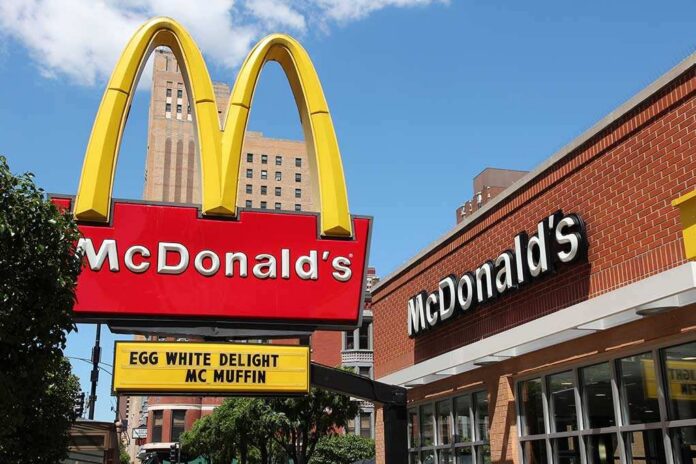
Abraham Merchant, CEO of New York’s Merchants Hospitality, reframes the situation as opportunity rather than crisis: “I don’t think restaurants are simply ‘shrinking’ portions. What we’re really seeing is more flexibility in how guests want to eat.” His perspective reflects strategic adaptation—chains that position themselves as customizable rather than merely smaller-portioned may capture both GLP-1 users and health-conscious customers generally. McDonald’s CEO Chris Kempczinski acknowledged the shift directly, noting that GLP-1 consumers “eat fewer calories in the day” but remain interested in protein, positioning McDonald’s existing protein offerings as advantageous in this environment.
When Corporate Strategy Meets Cultural Shift
The trend extends beyond chain restaurants into grocery retail and food manufacturing. Morrison’s supermarket in the UK launched 53 GLP-1-friendly products across 400 stores in January 2026, with plans for continued expansion. These include high-protein breads, ready meals, and meal components designed for customers whose appetite constraints demand maximum nutritional efficiency. Papa John’s introduced Protein Crust Pizza, while Dunkin’ added protein milk offerings. Smoothie King launched an entire GLP-1 support menu featuring high-protein, zero-added-sugar smoothies. The breadth of adaptation suggests industry consensus that this represents structural change rather than temporary accommodation.
Chipotle’s corporate positioning is instructive: “A high protein diet has held the title as the top diet pattern in the U.S. for three consecutive years.” By linking GLP-1 menu adaptation to broader dietary trends, chains legitimize the changes beyond pharmaceutical dependency. This framing matters for business durability—if the trend is “protein focus” rather than “Ozempic accommodation,” the menu changes survive even if GLP-1 adoption plateaus. It also appeals to non-medication users interested in protein-forward eating, expanding the addressable market beyond the 12.5 percent taking these drugs.
Resistance and Reality
Celebrity chef Gordon Ramsay represents vocal opposition, calling GLP-1-friendly menus “absolute bulls—” and vowing not to offer smaller portions at his restaurants. His resistance reflects culinary philosophy prioritizing portion tradition and chef authority over market adaptation. Yet Ramsay’s perspective appears increasingly isolated. Industry analysts, registered dietitians, restaurant operators from soul food establishments to fast-casual chains, and corporate executives across the sector express consensus that adaptation is both necessary and permanent. Teneshia Murray, owner of Atlanta’s T’s Brunch Bar, notes that even soul food customers want “the same flavor but on healthier food items” with more protein and fewer carbs.
The convergence of factors—GLP-1 adoption, federal dietary guidelines recommending higher protein intake, consumer demand for customization, and ingredient supply chains adapting to protein demand—creates reinforcing momentum. Restaurants face genuine operational complexity maintaining dual menu tracks and recalibrating pricing strategies, but the alternative is market share loss to competitors who adapt faster. The “supersize” era that defined American fast food since the 1980s is giving way to a customization era where nutritional value competes with convenience and taste as primary purchase drivers. Whether this represents progress or merely pharmaceutical-driven market distortion depends on perspective, but the business reality is undeniable.
Sources:
Ozempic boom collides with America’s eating habits: Restaurants shrink portions – Fox News
Weight-Loss Drugs Are Changing Fast Food Restaurant Menus – Entrepreneur
GLP-1 Friendly Menus: Food & Dining 2026 – Food Ingredients First
McDonald’s Follows Chipotle in Growing New Food Trend – TheStreet
How Restaurants Are Adapting to Increasing GLP-1 Usage – Northern Public Radio
Ozempic Food Economy Impact – New Atlas