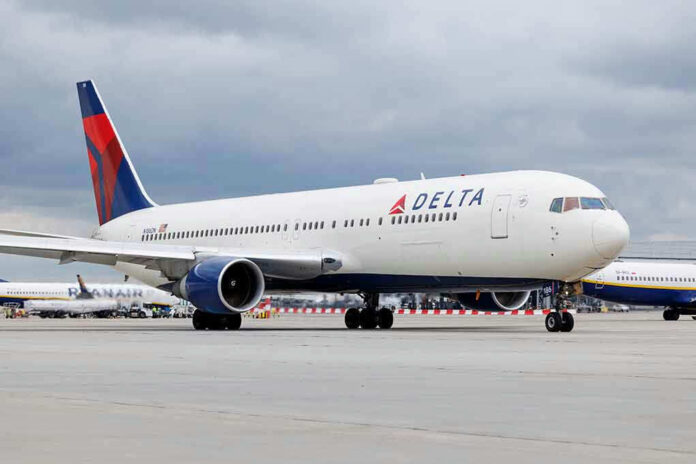
When two Delta regional jets kissed wings on a LaGuardia taxiway Wednesday night, it wasn’t just metal meeting metal—it was a stark reminder that even the most routine aviation operations can turn dangerous in seconds.
Story Snapshot
- Two Delta regional jets collided at low speed while taxiing at LaGuardia Airport around 9:56 p.m.
- The right wing of one aircraft struck the nose of another, causing windshield damage and at least one injury
- The incident highlights ongoing safety challenges at one of America’s busiest and most congested airports
- Ground collisions remain rare but preventable events that expose gaps in communication and procedures
The Collision That Shouldn’t Have Happened
The mathematics of aviation safety rely on layers of protection—air traffic control guidance, pilot training, ground radar systems, and standardized procedures. Yet on Wednesday evening at LaGuardia, those layers failed. Two Delta regional jets, moving at taxi speed across the tarmac, managed to find each other in what should have been a choreographed dance of aircraft movement. The collision occurred when the right wing of one jet struck the nose of another, immediately damaging at least one windshield and injuring someone aboard.
Air traffic control audio captured the immediate aftermath, with pilots reporting the damage and injury. The incident unfolded around 9:56 p.m., during what would typically be a busy evening operation at one of the nation’s most challenging airports. LaGuardia’s compact layout and high traffic volume create a pressure cooker environment where even minor miscommunications can escalate quickly.
LaGuardia’s Perfect Storm of Challenges
LaGuardia Airport processes over 30 million passengers annually through an infrastructure that was never designed for such volume. The airport’s taxiway system resembles a complex puzzle where regional jets, narrow-body aircraft, and ground vehicles must navigate in tight quarters. Despite a multi-billion-dollar renovation project aimed at modernizing the facility, the fundamental challenge remains: too many aircraft in too little space.
Two Delta Air Lines regional aircraft collide at low speed while taxiing at New York City's LaGuardia Airport.
Although a total of 93 people were involved in the incident, only one person, a cabin crew member, was injured.
According to reports, Endeavor flight 5155 was taxiing… pic.twitter.com/arYcTw0hGx
— Breaking Aviation News & Videos (@aviationbrk) October 2, 2025
Regional jets face particular pressures in this environment. These smaller aircraft often operate on compressed schedules, with crews managing multiple flights per day. The economic realities of regional aviation—thin margins, quick turnarounds, and cost pressures—can create conditions where safety protocols face subtle but persistent challenges. When fatigue meets complexity, even experienced crews can find themselves in situations that spiral beyond their control.
The Human Factor in Ground Safety
Ground collisions typically result from a breakdown in the human system rather than mechanical failure. Miscommunication between air traffic control and pilots, confusion about taxi instructions, or momentary lapses in situational awareness can transform routine ground movements into dangerous encounters. The fact that both aircraft involved were Delta regional jets suggests possible issues with company procedures, crew coordination, or ground control protocols specific to regional operations.
Aviation safety experts have long emphasized that ground operations present unique risks. Unlike the highly regulated environment of flight, ground movements involve multiple variables—other aircraft, ground vehicles, construction zones, and weather conditions—that can change rapidly. The relatively low speeds involved in ground collisions often mask their potential severity, but damaged aircraft and injured personnel remind us that even taxi-speed impacts can have serious consequences.
Broader Implications for Aviation Safety
This incident arrives during a period of increased scrutiny on airport ground safety. The Federal Aviation Administration and National Transportation Safety Board have been pushing for enhanced technology solutions, including improved ground radar systems and better runway lighting. However, technology alone cannot solve problems rooted in human factors and operational pressures.
The collision will likely prompt Delta to review its ground procedures and crew training protocols. More broadly, it may accelerate industry discussions about ground surveillance technology, crew resource management, and the specific challenges facing regional carriers operating in congested airports. While ground collisions remain statistically rare, their preventable nature makes each incident a missed opportunity to maintain aviation’s impressive safety record.
Sources:
Two Delta regional jets collide while taxiing at LaGuardia Airport – ABC7 NY