A single moment at a quiet Texas rail crossing sent shockwaves through an entire region, exposing how thin the line can be between routine travel and disaster.
Story Snapshot
- An Amtrak train carrying 129 passengers collided with a semi-truck in Schertz, Texas, on October 28, 2025
- Emergency responders rushed to the scene, injuries were reported, and both rail and road traffic ground to a halt
- The cause of the crash remains under investigation, with early reports offering little detail on casualties or accountability
- The event spotlights persistent dangers at rail grade crossings and reignites debate on transportation safety in suburban America
Collision in Suburbia: What Happened in Schertz?
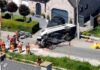
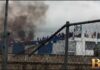
At 12:11 PM on October 28, 2025, a typical Amtrak journey through the Texas suburbs was violently interrupted when the passenger train struck a heavy-duty semi-truck at a rail crossing in Schertz, just northeast of San Antonio. The crash immediately drew a fleet of emergency vehicles, and as first responders navigated mangled metal and stunned survivors, the area’s roadways and rail lines fell eerily silent. The number of injured was not immediately disclosed, but the scale of the disruption was immediately clear: a major artery for both freight and passenger transport had been severed, affecting hundreds of lives and routines.
Early news coverage focused on the chaos at the scene—sirens, flashing lights, and the uncertain fate of those onboard. Passengers, many likely expecting nothing more dramatic than a cup of coffee and a quiet ride, suddenly found themselves at the center of a crisis. Local and national media were quick to note that the cause of the crash was not yet known. What was clear: this was not a minor fender-bender, but a collision at the intersection of America’s ongoing struggle to reconcile booming development with aging infrastructure and persistent safety gaps.
Unanswered Questions and the Search for Accountability
In the hours and days following the crash, the investigation into its cause became the central concern. The National Transportation Safety Board (NTSB) and Federal Railroad Administration (FRA) joined local authorities to sift through evidence and interview witnesses. Amtrak, the trucking company, and government regulators all found themselves under the microscope, with each organization’s reputation and future operations potentially affected by what investigators would uncover. The passengers—some injured, others shaken—waited for answers and, possibly, restitution.
This incident fits a troubling pattern. Texas, home to one of the nation’s busiest rail networks, has seen its share of grade crossing accidents despite decades of public awareness campaigns and infrastructure upgrades. The collision in Schertz quickly joined a list of high-profile incidents—each one prompting vows to improve, yet each followed by another reminder of the risks that remain. The lack of immediate clarity about the cause only fueled speculation. Was it human error, poor visibility, or inadequate crossing signals? Or was it the inevitable result of high-speed rail and heavy truck traffic converging in fast-growing suburbs?
The Ripple Effects: Safety, Trust, and the Cost of Inaction
The immediate impact was felt most acutely by the 129 passengers and crew, along with the driver of the semi-truck. But the consequences radiated much further. Amtrak service was halted, local roads were closed, and the region’s economic arteries pulsed with delays. Emergency services faced the dual challenge of tending to the injured and managing traffic chaos. For Schertz and the greater San Antonio area, the crash reignited anxieties about transportation safety—a concern that echoes in suburbs and small towns across the country.
Long-term effects are likely to include renewed calls for investment in safer grade crossings—think better signage, physical barriers, and even advanced warning technologies. Regulators may face pressure to act swiftly, while legal teams on all sides prepare for a potential wave of lawsuits and insurance claims. As with previous incidents, public trust in both rail and road operators will be tested, especially if answers are slow to arrive or accountability seems elusive.
Expert Voices: What History and Research Say About Rail Safety
Veterans in the transportation safety world know that most grade crossing collisions can be traced to a handful of recurring problems: insufficient warning systems, driver distraction, and the challenge of keeping up with rapid suburban development. Groups like Operation Lifesaver have spent decades educating the public about these dangers, and the FRA routinely issues new guidelines. However, change often comes only after tragedy. Academic studies consistently point to grade separation—building overpasses or underpasses—as the gold standard for safety, but such solutions are expensive and slow to implement.
Industry spokespeople tend to emphasize the rarity of such incidents relative to the millions of safe crossings each year, but for the communities affected, statistics offer little comfort. The collision in Schertz will almost certainly become a case study in what needs to change. As the investigation continues, the story will develop—but for the passengers, their families, and the city itself, the memory of that afternoon will linger far longer than the news cycle.
Sources:
FOX San Antonio: Amtrak train with 129 passengers collides with semi in Schertz
FreightWaves: Heavy-duty truck collides with Amtrak train near San Antonio
MySanAntonio: Amtrak crash Schertz, Texas