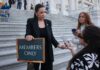
Police arrested a 56-year-old Massachusetts woman outside the Lindsay Clancy trial after she allegedly tried to record jurors as deliberations stretched on.
Story Snapshot
- State police arrested Dawn Light, 56, of Sutton, outside the Plymouth courthouse.
- Officials cited possible intimidation of a witness or juror under Massachusetts law.
- Jurors in the Clancy triple-murder case have struggled to reach a verdict as days pass.
- Courts treat filming near jurors as a serious threat to trial integrity in high-profile cases.
A Mid-Afternoon Arrest As Jurors Deliberate
Massachusetts State Police detained Dawn Light, age 56 and from Sutton, around 3:40 p.m. outside the Plymouth courthouse hosting the Lindsay Clancy murder trial. Reports state she tried to photograph or film jurors, which prompted immediate action by authorities. Police connected the alleged conduct to intimidation of a witness or juror, a charge that signals the court’s resolve to shield the jury from any contact that could sway or scare them during deliberations.
Local coverage described a packed scene as the public lined up to watch closing stages of the case, with crowd pressure rising while the jury weighed charges tied to the deaths of Clancy’s children. Judges often warn spectators to avoid any act that could expose juror identities. Even raising a phone near jurors can draw scrutiny when the stakes are this high and the courthouse is buzzing with cameras, commentary, and emotion.
Why Alleged Filming Near Jurors Triggers Fast Action
Massachusetts law treats intimidation of a witness or juror as a serious offense. The state’s jury instructions explain that pointing a phone camera and making a gesture like taking a photo can fall within intimidation, even without an explicit threat. That standard reflects common-sense risk: once a juror’s identity leaks, pressure can follow them home or online. Courts move quickly here because one moment of exposure can chill honest deliberation and poison a verdict.
Judges have wide latitude to protect juries in high-profile cases. Federal judiciary guidance shows courts adopt extra measures to keep jurors safe and insulated, including escorts, controlled hallways, and strict rules on photography and recording. Appellate rulings have upheld brief, targeted steps that address juror safety without undercutting fair-trial rights, because confidence in the verdict depends on jurors who feel secure and unobserved while they decide the facts.
Deadlock Tension Meets Courthouse Security
Media coverage and social feeds flagged long deliberations and a possible deadlock as the jury pushed into multiple days without a decision. That timing sharpened concerns about any outside contact, since pressure peaks when a panel struggles to agree. Judges have sent jurors home early on some days in this trial and warned them to avoid outside chatter, a reminder that even small breaches can taint the process and set up grounds for a mistrial.
🚨 JUST IN: The deadlocked Lindsay Clancy murder trial jury just entered its 5TH DAY of deliberations after a middle-aged woman was arrested for JURY INTIMIDATION last night
The judge said an "order" is being enforced, with no further comment — likely in reference to that arrest pic.twitter.com/h1dEitfPAU
— therealstateofamerica (@stateofamerica1) September 2, 2026
American conservative values place the rule of law and equal justice above the spectacle. On that score, the reported response aligns with basic order: protect jurors, enforce the rules, and keep mob pressure away from the verdict. No one has the right to stalk or film the people deciding a case. If police saw behavior that risked juror safety or independence, a swift arrest matched both the law and common sense.
How Courts Balance Openness With Safety
Courts are open to the public, but not at the cost of juror security. Bench guides on witness and juror intimidation list recording faces as a classic tactic that can chill testimony or tilt deliberations. That is why many courthouses forbid hallway interviews and limit cameras near jury paths. The aim is not secrecy; it is fairness. A verdict must come from evidence and law, not fear of what a viral clip or a doxxing threat might bring tomorrow.
What Comes Next
Light faces a charge tied to intimidation, and the Clancy jury continues its work under close protection. One alleged incident does not decide whether a mistrial occurs; judges weigh actual impact on jurors and the integrity of deliberations. The focus will stay on whether the jury can reach a unanimous decision based on what they heard in court. That outcome, whatever it is, must rest on facts, not on phone cameras in the courthouse corridor.
Sources:
nypost.com, bostonherald.com, patriotledger.com, moneycontrol.com, coastalabc.com, youtube.com, bostonglobe.com, boston.com, turnto10.com
© restoreamericanglory.com 2026. All rights reserved.