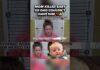

The most viral “clue” in the San Diego mosque shooting may be a single photo that tells people far more about their own biases than it does about the teenage killer in the frame.
Story Snapshot
- Police say the mosque attack is a hate-crime investigation, but they have released almost no hard motive evidence so far.
- Online sleuths are treating an alleged shooter photo as a Rosetta Stone for ideology, despite zero public forensic verification.
- The suspects’ camouflage clothing and reported “hate rhetoric” fuel speculation but do not yet prove a specific belief system.
- American conservatives have a direct stake in demanding evidence over narrative when officials and social media both rush to label.
The San Diego Mosque Attack And A Photo That Lit Up X
San Diego police say two teenagers, seventeen and eighteen years old, opened fire outside the Islamic Center of San Diego late Monday morning, killing three men, including a security guard described as a devoted father, before the suspects took their own lives nearby.[2][3][4] Authorities quickly called in the Federal Bureau of Investigation (FBI) and labeled the case a potential hate crime, citing “generalized hate rhetoric” and anti-Islam writings connected to the suspects.[3][4] Within hours, X users focused on something else: a photo of one alleged shooter.
That image, posted and reposted with breathless captions, allegedly shows the eighteen-year-old suspect posing in camouflage, weapon-style stance, gaze fixed on the camera. Commenters treated the frame like a confession. Some claimed it revealed a specific political tribe; others swore it proved mental illness; a few insisted the real story was still hidden. None of them had access to the basic forensic questions any detective would ask: When was this taken? Who shot it? Has it been altered? Those answers are not yet public in the record you and I can see.
What Authorities Actually Confirmed Versus What The Internet Assumed
Police say the younger teen’s mother called before the attack, reporting her son was suicidal, her car missing, and several firearms gone.[1] Officers learned he was with another teen and dressed in camouflage, then began hunting for the vehicle.[2][3] Somewhere between that call and the first 911 reports of gunfire around 11:30 a.m., the teens turned their crisis into a massacre outside a house of worship.[2][3] When officers reached the mosque minutes later, three adults already lay dead in front of the building.[3]
Investigators say they later found anti-Islamic writings in a vehicle associated with the suspects and that at least one firearm carried hate speech scrawled on it.[3][4] Local coverage also reports a note the mother found before the shooting, but officials have not disclosed what it says.[1] That means the most direct window into the teen’s mind is still sealed, while the photo on X is wide open for anyone to project onto. Law enforcement, for now, describes the evidence only as “generalized” hate rhetoric, not a manifesto, not a public group pledge, and not a detailed ideological screed.[3][4]
The Camouflage Trap: When Clothing Becomes A Political Rorschach Test
Reporters repeatedly mention that both suspects wore camouflage on the day of the attack.[2][3][4] That single detail has become the skeleton key for some online commentators: camouflage equals militia, equals far-right extremism, equals the story is solved. From an evidentiary standpoint, that chain is flimsy. Camouflage shows up on deer hunters, high school kids in fashion phases, veterans, airsoft hobbyists, and yes, sometimes extremists. Clothing alone rarely carries a fixed ideological barcode without corroborating documents or statements.
Authorities have not said the camouflage linked the teens to any organized group.[2][3][4] They have not released screenshots tying the outfit in the photo to a particular online persona, nor have they offered a timetable showing that the image was taken near the attack. Until that kind of connective tissue appears in court filings or official briefings, the responsible posture is simple: the clothing fits the timeline, but not yet a specific political label. Conservative common sense should resist the modern urge to turn every camo shirt into Exhibit A for whatever narrative a tribe prefers.
Evidence, Not Emotion: A Conservative Lens On Hate-Crime Narratives
Police say they are investigating this as a hate crime and that the teens expressed hate rhetoric before the attack.[2][4] Given the reported anti-Islam writings and the choice of a mosque, that focus makes basic sense. But a hate-crime label is a hypothesis about motive, not a completed proof. Officials have not yet shared the exact language, the full note, or a clear ideological map of what these teenagers believed and why they selected that target.[1][3][4] That gap leaves room for both overreach and denial.
JUST IN: San Diego police say they're responding to an active shooter at a local mosque https://t.co/vDeOjv6myE
📸 AP Photo/Gregory Bull pic.twitter.com/nvisnEiuR5
— 1010 WINS on 92.3 FM (@1010WINS) May 18, 2026
From a conservative standpoint, the standard should be consistent. When progressive officials rush to tag a crime as driven by racism, Islamophobia, or “hate,” citizens should ask to see the receipts: quotes, videos, documents, timelines. By the same token, when the evidence does show targeted religious hatred, conservatives should not flinch from calling it what it is. The key is refusing to let partisan hunger outrun facts, especially when a single photo is doing outsized narrative work and crucial records remain sealed.
Why That Viral Photo Should Make You Slow Down, Not Speed Up
Every major shooting now comes with a familiar choreography: a tragedy, a scramble for basic facts, and a race on social media to declare the “real” story from half-lit pixels and rumor-screen text.[1] Researchers who study crisis misinformation note that ambiguous visuals get over-read because they feel concrete when everything else is fog.[1] The San Diego photo fits that pattern perfectly. It may end up authentic, it may carry real clues about the teen’s beliefs, or it may prove to be a generic snapshot inflated into meaning.
The smarter move is to treat it like a placeholder, not a verdict. Serious answers will come from the things we cannot yet see: the note’s contents, digital histories from phones and laptops, search-warrant affidavits, maybe surveillance video showing how the teens prepared.[1][4] Until then, the photo is mostly a mirror, reflecting the fears and priors of whoever stares at it longest. Citizens who value ordered liberty, due process, and truth over clicks should insist on something better than that before locking in a story about who these young men were and why they chose to kill.
Sources:
[1] Web – Police were searching for teens behind San Diego mosque shooting …
[2] YouTube – 2 suspects in San Diego mosque shooting are dead, police source …
[3] YouTube – Alleged suspect’s mom alerted police after car, weapons vanished …
[4] YouTube – Five dead after ‘hate crime’ shooting at a mosque in San …