A sitting president publicly accusing his predecessor of treason while sharing AI-generated arrest videos crosses a line America has never witnessed before.
Story Snapshot
- Trump accused Barack Obama of treason and sedition, sharing deepfake videos depicting Obama’s arrest and imprisonment
- Director of National Intelligence Tulsi Gabbard released documents claiming Obama weaponized intelligence agencies to undermine Trump’s 2016 victory
- No formal charges have been filed against Obama despite criminal referrals to the Department of Justice
- The claims contradict a bipartisan 2020 Senate Intelligence Committee report confirming Russian interference attempts
- Legal experts warn the rhetoric represents an unprecedented attack on democratic norms and presidential transitions
When Presidents Weaponize the Power of Accusation
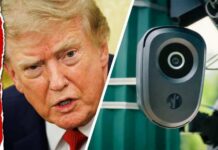
Trump leveled his most serious allegations against Obama in July 2025, calling him the “ringleader” of a conspiracy to delegitimize the 2016 election. The charges included treason, sedition, and orchestrating a years-long coup through weaponized intelligence assessments. Trump amplified these accusations by sharing an AI-generated video showing FBI agents hauling Obama from the Oval Office, followed by images of the former president in an orange prison jumpsuit. The deepfake spread across social media platforms within hours, blurring reality and fiction in ways that would have seemed impossible just years ago.
The timing mattered as much as the message. These accusations emerged while Trump faced scrutiny over Jeffrey Epstein files and immigration enforcement controversies in Minneapolis. Obama’s spokesperson dismissed the claims as a “ridiculous distraction,” noting that nothing in the released documents undermined established conclusions about Russian interference. Yet the spectacle achieved its purpose, dominating news cycles and energizing Trump’s base with promises of accountability for what he characterized as the greatest political crime in American history.
The Intelligence Documents at the Center of the Storm
Tulsi Gabbard’s role as Director of National Intelligence transformed from advisory to adversarial when she released documents allegedly proving Obama directed James Clapper to manufacture intelligence assessments after the 2016 election. According to Gabbard’s interpretation, Obama ordered these reports despite earlier intelligence community conclusions that found no evidence of vote manipulation. She submitted criminal referrals to the Department of Justice, naming Obama administration officials as potential co-conspirators in what Trump’s allies called an attempted coup.
The narrative collides with established facts. A bipartisan Senate Intelligence Committee report from 2020, led by Marco Rubio, confirmed Russian interference attempts while finding no evidence that votes were changed. Intelligence professionals note that assessing foreign influence campaigns after an election represents standard protocol, not political sabotage. The distinction between investigating interference and manufacturing false claims defines the credibility gap in Trump’s accusations. Obama directed an assessment of what happened; Trump claims Obama invented what happened.
AI Deepfakes and the Erosion of Shared Reality
The AI-generated arrest video represents something more dangerous than typical political hyperbole. Technology now allows presidents to circulate fabricated imagery of their opponents being arrested, creating visual “evidence” of crimes that never occurred. Millions of Americans saw these images before fact-checkers could respond, and many continue circulating them months later. CNN’s Daniel Dale noted Trump’s history of making vague, unsubstantiated accusations against Obama, but the addition of convincing deepfake videos raises the stakes exponentially.
Social media platforms struggled to label the content appropriately. Is it satire? Political commentary? Deliberately misleading propaganda? The ambiguity serves Trump’s purposes perfectly. His supporters share the videos as wish fulfillment; his critics rage against the deception; and undecided Americans increasingly question what they can believe. When a president weaponizes artificial intelligence to depict the arrest of his predecessor, the boundary between political rhetoric and incitement deserves serious examination.
The Precedent That Should Terrify Every American
Presidential transitions have survived bitter disputes before, from Adams and Jefferson to Bush and Clinton. Yet no former president faced treason accusations backed by criminal referrals from his successor’s administration. The precedent threatens to make every future transition a potential prelude to prosecution. If Obama faces charges for directing standard intelligence assessments, what prevents future administrations from criminalizing any controversial policy decision by their predecessors?
The Georgia connection adds another layer to this unfolding drama. FBI raids in January 2026 targeted records related to the 2020 election in the same jurisdiction where Trump faced indictment in 2023. Legal experts characterized these actions as attacks on democratic accountability mechanisms. Trump’s supporters see them as overdue enforcement against election fraud. The gulf between these interpretations suggests Americans no longer share basic assumptions about legitimate political authority or the rule of law.
Where Accountability Meets Authoritarianism
Trump’s vow to “go after people” resonates differently depending on your perspective. His supporters hear promises of justice for genuine crimes they believe corrupted American institutions. His critics hear authoritarian threats against political opponents. The facts matter here: despite years of investigations including the Durham probe from 2019 to 2023, no major charges materialized against Obama or his senior officials. Trump controlled the executive branch during his first term with authority to prosecute any crimes he could prove.
The absence of prosecutions despite ample opportunity suggests either a massive cover-up involving Trump’s own appointees or the absence of prosecutable offenses. Common sense and conservative principles favor the latter explanation. Conservatives traditionally oppose weaponizing government power against political opponents, recognizing that such weapons eventually turn on everyone. The intelligence community concluded Russia interfered in 2016; that conclusion surviving bipartisan scrutiny should settle the matter for anyone prioritizing evidence over grievance.
As of January 2026, no arrests have occurred and no charges have been filed. Trump continues posting about Obama’s supposed crimes on Truth Social while viral videos debunk the arrest rumors. The Department of Justice received Gabbard’s referrals but has taken no public action. Meanwhile, the AI-generated images persist online, forever archived as the moment when presidential power met deepfake technology and truth became negotiable. Whether this represents accountability or authoritarianism depends entirely on whether evidence matters anymore.
Sources:
Trump accuses Obama of treason in Oval Office – ABC News
Trump, Obama, and Georgia Election on Truth Social – Mother Jones
Trump shares generated video of FBI agents arresting Obama – The National Desk